
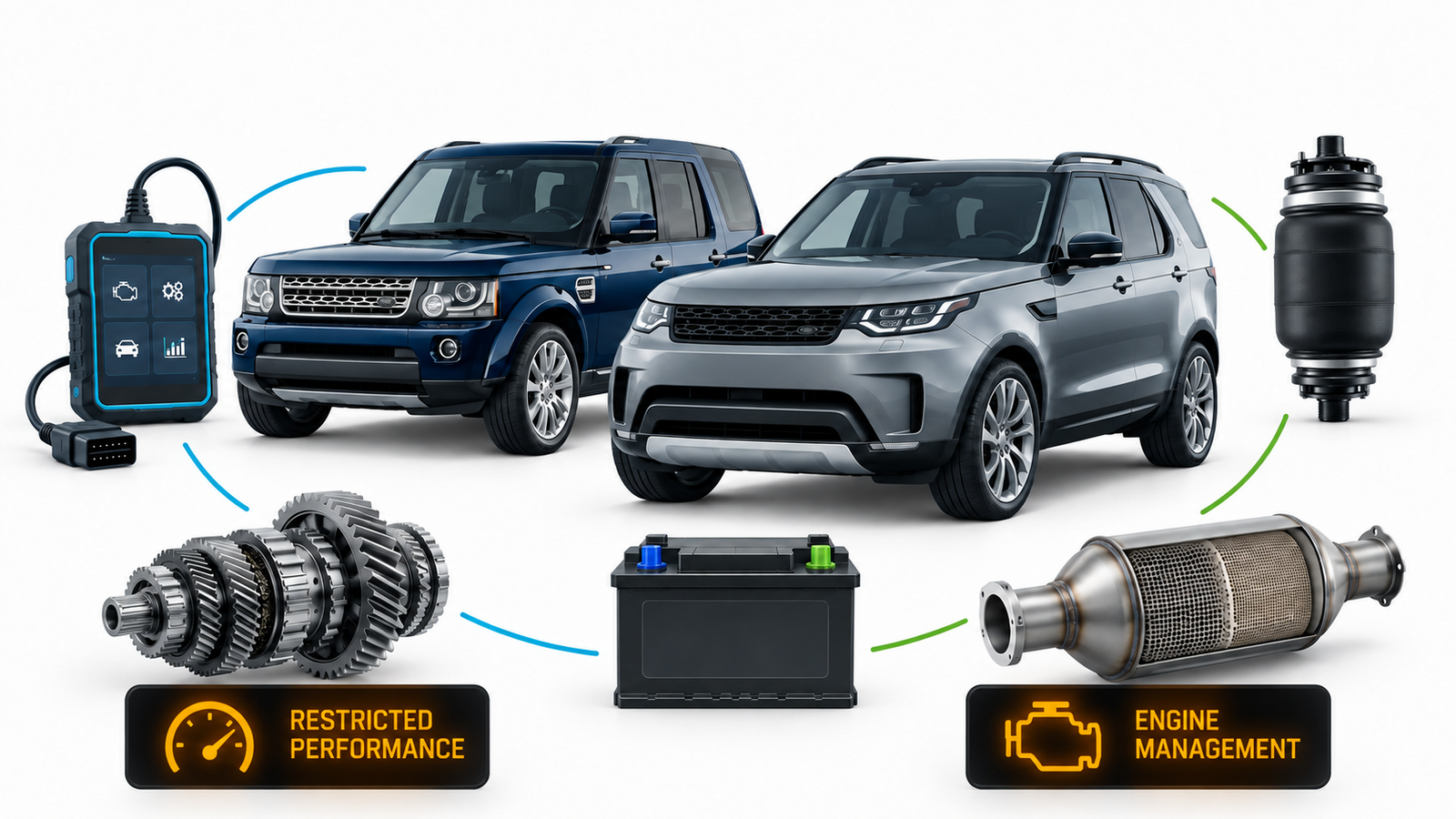
Illustrative promotional artwork — not a genuine OEM photograph. Not every Discovery has every issue shown.
Common problems, warning messages, symptoms and what to check. A specialist, symptom-led guide to Land Rover Discovery 4 and Discovery 5 faults — search below, browse by category, or jump straight to the section that matches what your vehicle is doing.
What is your Discovery doing?
Can't find your Discovery problem?
Ask the Discovery Hub for guidance, or book with Newtown Garage if the vehicle needs diagnosis or repair.
Discovery 4 & Discovery 5 Fault Guide by Category
Every fault below can also be found instantly using the search box above. Open a category, then open an individual fault for its full detail.
Discovery 4 — Engine & Restricted Performance
Restricted Performance / Limp Mode
What you may notice: The vehicle feels noticeably slower than normal, particularly under hard acceleration or climbing hills, and a "Restricted Performance" message may appear on the dash.
Restricted PerformanceEngine ManagementReduced power available
Possible causes:
- Intake or boost leaks
- A cracked inlet manifold
- Throttle body fault
- Turbocharger or boost-control problems
- A stored fault code affecting engine management
What to check:
- Read stored diagnostic fault codes before replacing anything
- Check for boost/intake leaks and manifold condition
- Check throttle body operation
- Road test to confirm whether the fault is constant or load-dependent
Cracked Inlet Manifolds / Intake & Boost Leaks
What you may notice: A whistling or hissing noise under acceleration, rough idle, or a Restricted Performance message.
Restricted Performance
Possible causes:
- A cracked plastic inlet manifold, a known wear item on the SDV6
- Perished intake hoses or jubilee clips
- A split or leaking intercooler pipe
What to check:
- Inspect the inlet manifold and surrounding hoses for cracks
- Smoke-test the intake system where available
- Check for oily residue around joints, indicating a boost leak
Throttle Body Faults
What you may notice: Hesitant or inconsistent throttle response, occasionally alongside a Restricted Performance message.
Restricted Performance
Possible causes:
- A sticking or dirty throttle body
- A wiring or connector fault at the throttle body
What to check:
- Inspect and clean the throttle body where appropriate
- Check the wiring loom and connector for corrosion or damage
- Confirm correct operation with a diagnostic scan
Split Boost or Intercooler Hoses
What you may notice: A loss of power under acceleration, sometimes with a hissing sound from the engine bay.
Possible causes:
- A split or perished intercooler hose
- A loose or degraded jubilee clip
What to check:
- Visually inspect all boost/intercooler hoses along their length
- Check clips are tight and rubber hasn't perished
- Pressure-test the intake system where equipment is available
Turbocharger / Boost-Control Problems
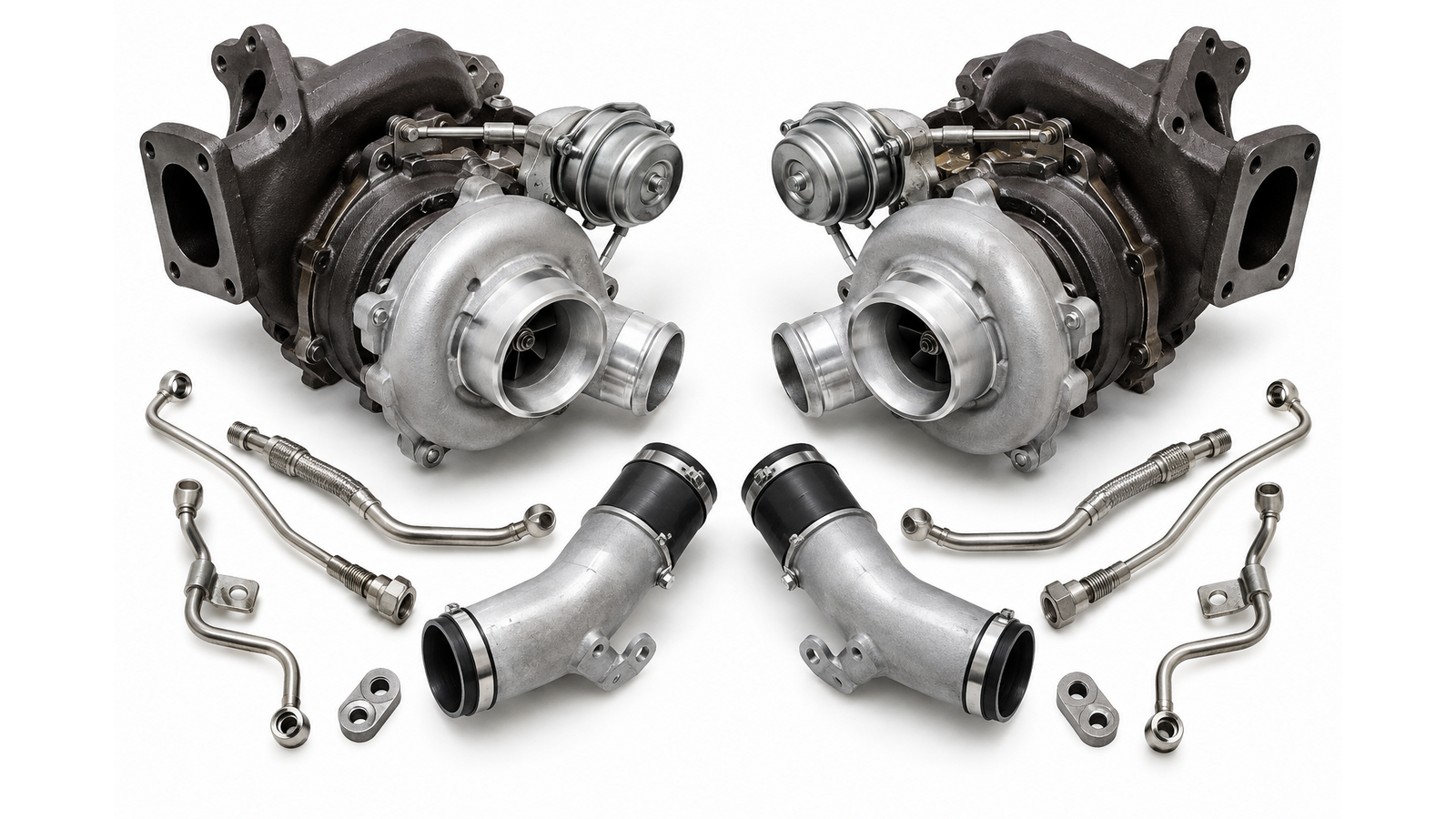
What you may notice: Reduced power, unusual turbo whine, or excessive smoke from the exhaust.
Restricted Performance
Possible causes:
- A faulty boost-control (wastegate) actuator or solenoid
- Turbocharger wear on higher-mileage examples
- A boost leak elsewhere in the system masquerading as a turbo fault
What to check:
- Rule out simpler boost leaks first
- Check boost-control actuator and solenoid operation
- Have the turbocharger itself assessed by a specialist if the fault persists
MAP / MAF Sensor Issues
What you may notice: Poor running, hesitation, or a stored fault code relating to intake air or boost pressure sensing.
Possible causes:
- A dirty or failing MAP (manifold air pressure) or MAF (mass air flow) sensor
- Wiring or connector corrosion
What to check:
- Read stored fault codes for sensor-specific errors
- Inspect and clean the relevant sensor
- Check the wiring loom for corrosion, a common issue in this area
EGR Faults
What you may notice: Rough idle, a warning light, or a stored EGR-related fault code.
Engine Management
Possible causes:
- A sticking or carboned-up EGR valve
- Wiring or vacuum-control faults
What to check:
- Read stored fault codes for EGR-specific errors
- Inspect the EGR valve for carbon build-up
- Check associated vacuum or electrical control circuits
DPF Faults
What you may notice: A DPF warning light, increased fuel consumption, or a noticeable loss of power.
DPF warning
Possible causes:
- Short journeys preventing the DPF from regenerating fully
- A genuine DPF fault requiring investigation
What to check:
- Attempt a controlled motorway-speed regeneration run where safe to do so
- Read stored fault codes
- Have the DPF and associated sensors inspected if the light persists
Coolant Loss
What you may notice: A coolant warning light, or the coolant level needing regular topping up.
Coolant level low
Possible causes:
- A leaking hose, pipe or gasket
- A more significant coolant system fault requiring further investigation
What to check:
- Check coolant level and colour
- Inspect visible hoses, pipes and the header tank for leaks
- Pressure-test the cooling system if the cause isn't obvious
Water in Fuel Warning
What you may notice: A "Water in Fuel" message on the dashboard.
Water in Fuel
Possible causes:
- Genuine water contamination in the fuel (condensation or contaminated fuel)
- A faulty water-in-fuel sensor or wiring/connector fault
What to check:
- Drain and inspect the water-in-fuel sensor bowl first, ruling out genuine water
- If no water is present, check the sensor, wiring and connector
- Do not ignore repeated warnings — investigate the actual cause rather than just clearing the message
Crankshaft / Bottom-End Engine Failure
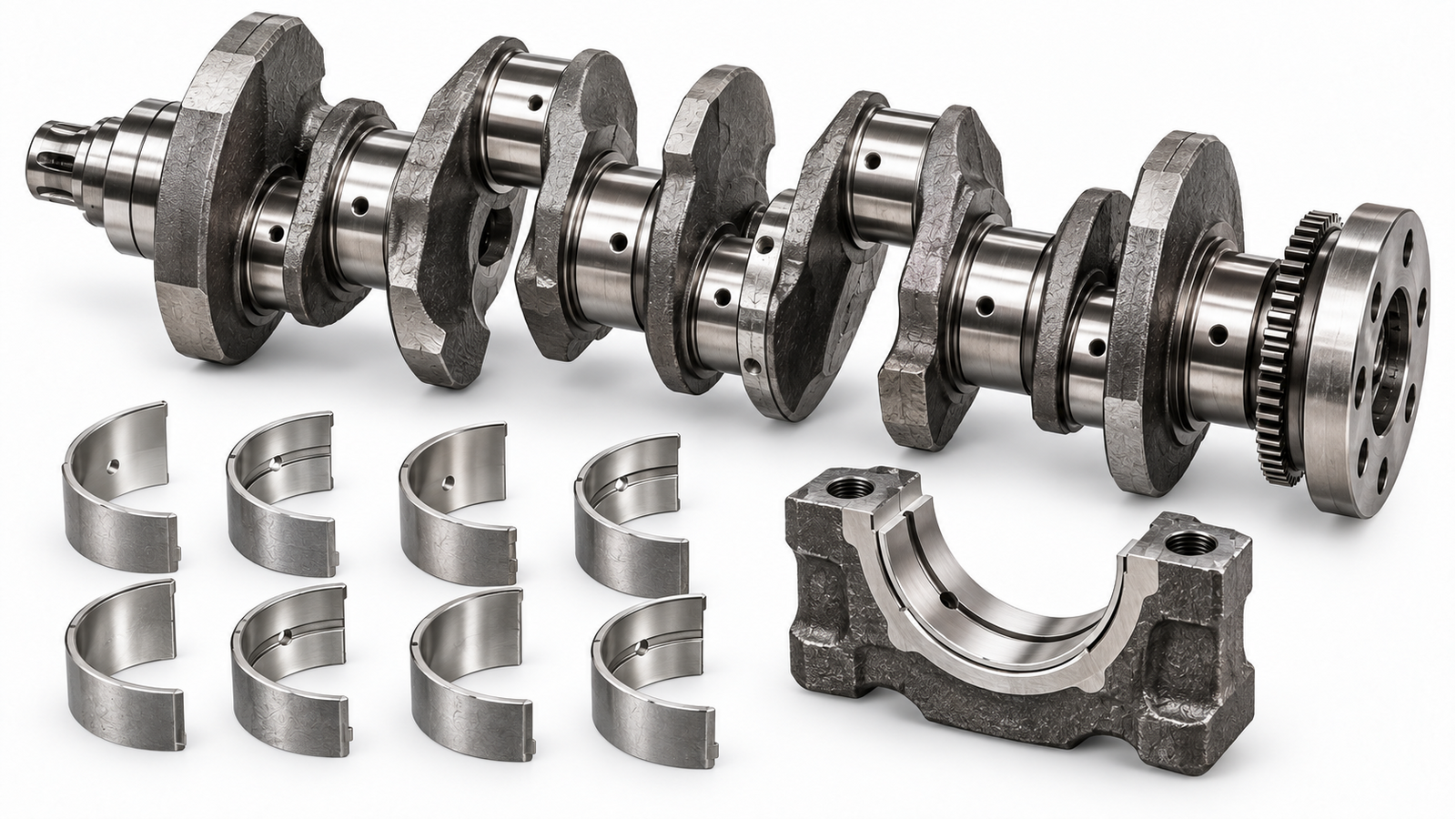
What you may notice: Unusual knocking or rumbling from deep within the engine, low oil pressure warnings, or in serious cases a sudden loss of power.
Oil pressure warning
Possible causes:
- Crankshaft or bottom-end bearing wear, a known but not universal issue on some SDV6 engines, often linked to inconsistent oil-change intervals
What to check:
- Listen for unusual engine noise on a cold start and at idle
- Check oil pressure readings via diagnostic equipment
- Review the full service and oil-change history — this is the single biggest risk factor
- Any suspected bottom-end noise should be investigated before further driving
Timing Belt History
What you may notice: No specific symptom until failure — this is a preventative maintenance item, not a fault that announces itself in advance.
Possible causes:
- The 2.7 and 3.0 diesel engines are timing-belt driven (not chain-driven); the 5.0 V8 petrol uses a chain and is not affected
What to check:
- Ask for dated, itemised evidence of timing-belt replacement rather than relying on service history alone
- If there's no clear evidence of replacement, budget for it as a precaution
- See our dedicated timing belt guide for interval guidance
Discovery 4 — Suspension
Front Lower Suspension Arms / Bushes
What you may notice: A knock, clonk or clunk from the front of the vehicle, most noticeable as the suspension loads and unloads under braking or over bumps.
Possible causes:
- Worn front lower suspension-arm bushes, a common wear item on both Discovery 4 and Discovery 5
- Worn ball joints or drop links contributing to the same noise
- Anti-roll-bar bushes or links
What to check:
- Have the front suspension inspected on a ramp under load
- Check lower arm bushes, ball joints, drop links and anti-roll-bar bushes together rather than assuming a single cause
- Confirm the source of the noise before replacing parts, as several components can produce a similar knock
Anti-Roll-Bar Bushes
What you may notice: A rattling or knocking noise over uneven surfaces, and slightly reduced body control through corners.
Possible causes:
- Worn anti-roll-bar bushes or end links
What to check:
- Inspect anti-roll-bar bushes and drop links for play or perishing
- Check for movement by hand with the wheels off the ground
Drop Links
What you may notice: A knocking noise, often most noticeable at low speed over bumps or when turning.
Possible causes:
- Worn anti-roll-bar drop-link joints
What to check:
- Check drop links for play at each end
- Inspect for corrosion around the ball-joint housing
Rear Suspension-Arm Wear
What you may notice: Vague or slightly unsettled handling at the rear, or uneven rear tyre wear.
Possible causes:
- Worn rear suspension-arm bushes or ball joints
What to check:
- Inspect rear suspension arms and bushes on a ramp
- Check for uneven rear tyre wear as a secondary indicator
Wheel Bearings
What you may notice: A droning or rumbling noise that changes with road speed, sometimes louder when cornering.
Possible causes:
- A worn wheel bearing on one corner of the vehicle
What to check:
- Road test and note whether the noise changes when weight-transferring through corners
- Check for play in the bearing on a ramp
- Rule out tyre noise before condemning a bearing
Uneven Tyre Wear
What you may notice: One edge of a tyre wearing faster than the rest, or a tyre wearing unevenly compared to its opposite pair.
Possible causes:
- Incorrect wheel alignment
- Worn suspension components allowing excess movement
- Uneven tyre pressures
What to check:
- Check and correct tyre pressures first
- Inspect wear pattern to identify likely cause (inner/outer edge vs centre)
- Carry out a four-wheel alignment check if wear is uneven
Four-Wheel Alignment / Pulling Left or Right
What you may notice: The vehicle pulling to one side on a flat road, or the steering wheel sitting off-centre when driving straight.
Possible causes:
- Wheel alignment out of specification
- Uneven tyre pressures
- A worn suspension or steering component allowing geometry to shift
What to check:
- Check tyre pressures are equal side-to-side
- Carry out a four-wheel alignment check
- Inspect suspension and steering components for wear if alignment alone doesn't resolve it
Air Suspension
Air Suspension — Air Leak / Air Spring / Valve Block
What you may notice: The vehicle sits noticeably lower on one corner overnight or after standing for a while, or one side appears to be leaning.
Suspension FaultVehicle LoweredSuspension Height Unavailable
Possible causes:
- A leaking air spring/strut
- A leaking valve block or air line
- A faulty height sensor giving an incorrect reading
- The compressor should not automatically be assumed to be the cause — it's often further down the list
What to check:
- Check ride height on each corner after the vehicle has stood overnight
- Listen for the compressor running excessively trying to compensate for a leak
- Smoke- or soap-test air lines, the valve block and air springs to trace the actual leak point
- Check height-sensor readings against actual ride height
Air Suspension Compressor Problems
What you may notice: The compressor running for longer than usual, running very frequently, or not running at all, sometimes with reduced suspension performance.
Suspension Fault
Possible causes:
- A tired compressor working harder to compensate for a leak elsewhere
- A genuine compressor fault
- A blocked or restricted air intake filter on the compressor
What to check:
- Establish whether there's a leak elsewhere before condemning the compressor
- Check the compressor's intake filter
- Listen for correct compressor operation during a height-adjustment cycle
Air Suspension Height Sensors
What you may notice: Uneven ride height that doesn't match a genuine air leak, or inconsistent suspension behaviour between corners.
Suspension Fault
Possible causes:
- A faulty or misaligned height sensor giving the system incorrect information
- Damaged or corroded sensor wiring
What to check:
- Compare each height sensor's reported value against actual ride height
- Inspect sensor linkages for damage or disconnection
- Check wiring and connectors for corrosion
Brakes
Front Brake Disc Judder / Disc Run-Out
What you may notice: A vibration or shaking felt through the steering wheel, pedal or seat specifically when braking, usually worse at higher speeds.
Possible causes:
- Brake disc run-out or distortion, often from heat cycling
- Uneven brake-pad deposits on the disc surface
- Hub run-out transferring movement to the disc
- In some cases, suspension or steering component wear contributing to the sensation
What to check:
- Measure disc run-out and thickness variation
- Inspect for uneven pad deposit transfer
- Check hub run-out where discs are within specification
- Road test to confirm the vibration is speed- and brake-application-specific rather than constant
Brake Disc & Pad Wear
What you may notice: A squealing or grinding noise when braking, or a brake-wear warning where fitted.
Brake pad wear (some models)
Possible causes:
- Normal wear — the Discovery is a heavy vehicle and brake consumables wear faster than on a typical car
What to check:
- Check pad thickness and disc condition visually or via warning-sensor readings
- Replace discs and pads as a pair per axle for even performance
Electronic Parking Brake Screeching / Failure
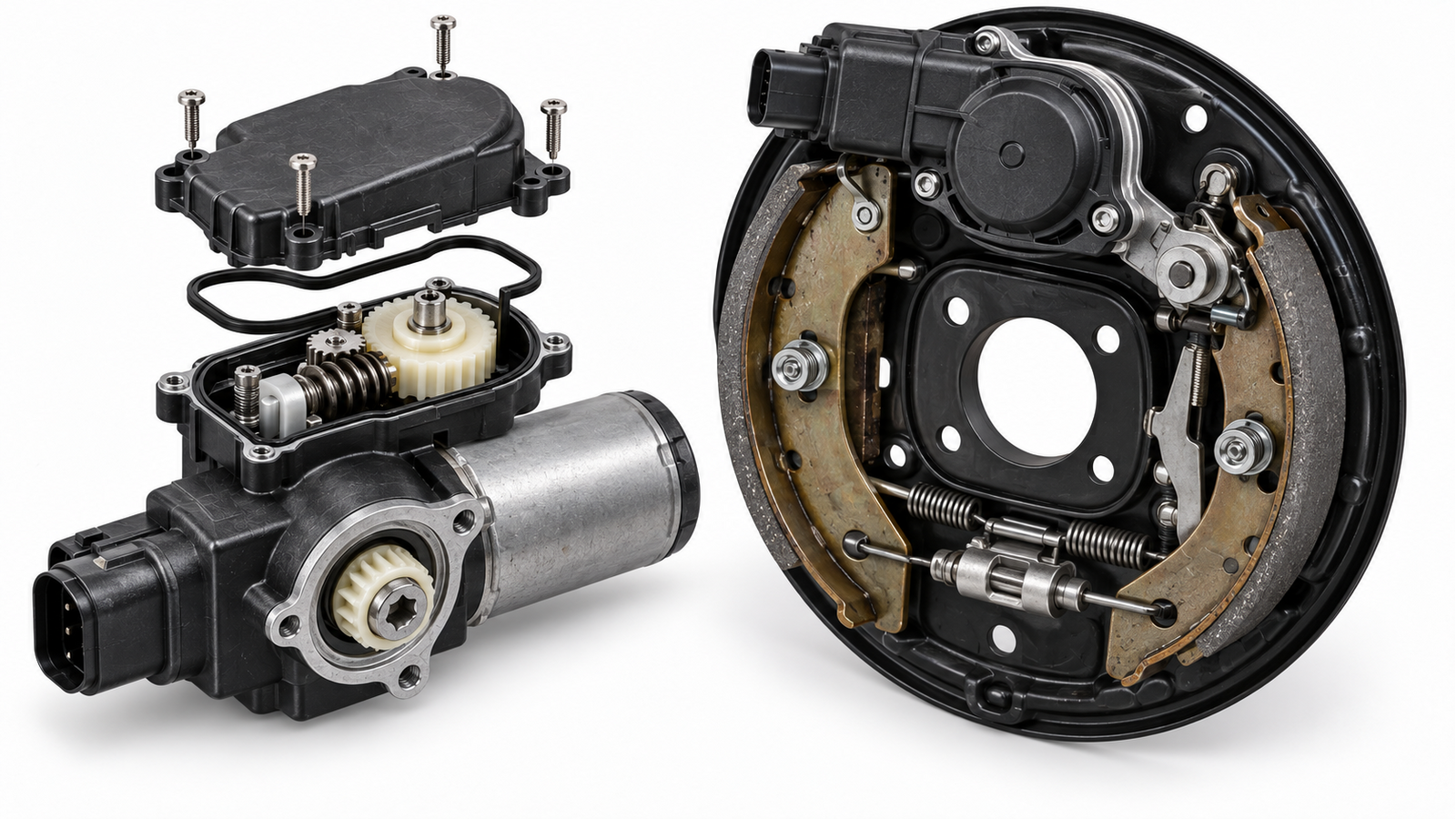
What you may notice: A screeching noise when the electronic parking brake engages or releases, a parking-brake warning light, or the parking brake failing to apply or release correctly.
Parking Brake Fault
Possible causes:
- Worn drum-in-hat parking-brake shoes, a well-known Discovery 4/LR4 issue — as the shoe material wears, the EPB actuator has to pull the cables further to reach the same clamping force, which is what produces the screech
- A faulty EPB actuator module, motor or reduction gearset
- A software or calibration fault requiring a relearn/reset procedure
What to check:
- Listen for the screech during a normal engage/release cycle
- Check parking-brake shoe wear before condemning the actuator module — worn shoes are the most common cause of this exact symptom
- Check for stored fault codes relating to the parking-brake module
Brake-Pipe Corrosion
What you may notice: A spongy or reduced-feeling brake pedal, visible corrosion, or in serious cases a warning light relating to brake fluid or pressure.
Brake fault
Possible causes:
- Corrosion of steel brake pipes/lines, more likely on older or high-mileage examples, particularly if the vehicle has spent time in areas with heavy road salt use
What to check:
- Visually inspect brake lines along their full length, including underbody sections
- Check for fluid seepage or corrosion staining
- Treat any suspected pipe corrosion as requiring prompt attention
Driveline
High-Speed Vibration (Tyres, Wheels & Balance)
What you may notice: A vibration that builds with road speed, often most noticeable around 60–70mph, felt through the seat, steering wheel or floor rather than specifically under braking.
Possible causes:
- Wheel balance out of tolerance
- A damaged or deformed tyre (impact damage or an internal fault)
- A wheel bearing
- In rarer cases, the propshaft or driveline if tyres and wheels check out fine
What to check:
- Start with tyres and wheel balance — this resolves the majority of speed-related vibration
- Inspect tyres for impact damage, bulges or uneven wear
- Check wheel bearings if tyres and balance are confirmed correct
- Only investigate the propshaft/driveline once tyres, wheels and bearings have been ruled out
Rear Propshaft Centre Bearing
What you may notice: A vibration or knocking felt from underneath the vehicle, sometimes worsening with speed or under load.
Possible causes:
- A worn rear propshaft centre support bearing
What to check:
- Inspect the centre bearing for play or perishing of its rubber mount
- Road test to confirm the vibration correlates with propshaft rotation speed rather than wheel speed
Differential Whine
What you may notice: A whining or humming noise that changes with road speed and/or when lifting off the accelerator.
Possible causes:
- Differential wear or low/degraded differential oil
- Bearing wear within the differential
What to check:
- Check differential oil level and condition
- Road test noting whether the noise changes under acceleration versus deceleration
- Have the differential inspected if the noise persists
Gearbox Judder / Torque-Converter-Type Vibration
What you may notice: A shudder or judder felt during gentle acceleration or at low, steady speeds, sometimes most noticeable around town.
Possible causes:
- Torque-converter lock-up shudder
- Transmission fluid condition or level
- In some cases, engine mounts contributing to a similar sensation
What to check:
- Check transmission fluid level and condition
- Road test to identify the exact speed/load at which the judder occurs
- See our dedicated gearbox guide for more detail
Electrical & Body
Door Lock / Door Latch Actuator Fault
What you may notice: A double beep when locking the vehicle, mirrors not folding when they normally would, or one door failing to lock or unlock with the rest.
Door open / not closed properly (despite being shut)
Possible causes:
- A door, the bonnet or the tailgate not registering as fully closed to the central locking system
- A worn or failing door-latch actuator, a well-known Discovery wear item
- A wiring fault at the affected door
What to check:
- Check and firmly close every door, the bonnet and the tailgate individually before assuming a fault
- Identify which specific door is the culprit by locking/unlocking one door at a time
- Inspect the latch actuator on the identified door
- Check wiring at the door hinge/loom gaiter, a common point of failure
Tailgate Won't Open
What you may notice: The tailgate failing to release or open, either from the key fob, interior switch or exterior handle.
Possible causes:
- A failed or sticking tailgate latch/actuator
- A flat or weak 12V battery, which can affect the release solenoid
- On Discovery 5 powered tailgates, a motor or software fault
What to check:
- Check battery condition and voltage first
- Try the manual release/emergency access method where fitted
- Inspect the tailgate latch and actuator
- On Discovery 5, check for powered-tailgate-specific fault codes
Weak Battery Causing Multiple Warning Lights
What you may notice: Several unrelated warning lights appearing together, intermittent electrical glitches, or the vehicle behaving oddly after a short journey.
Multiple / intermittent warning lights
Possible causes:
- A weak, old or failing 12V battery — a very common cause of seemingly unrelated multiple warning lights
- A charging-system fault
- A poor battery earth connection
What to check:
- Test battery condition and state of charge before investigating individual warning lights
- Check charging system output while running
- Inspect battery terminals and earth points for corrosion
- See our dedicated battery and warning light guide
Stop/Start Not Working
What you may notice: The engine stop/start system not activating at idle, or a message indicating it's temporarily unavailable.
Stop/Start Unavailable
Possible causes:
- The vehicle intentionally disabling stop/start under unsuitable conditions (low battery charge, cold engine, climate demand, bonnet open, etc.) — this is normal, expected behaviour
- A genuine fault with the main or auxiliary/start-stop battery where fitted
- A battery-monitoring or charging-system fault
What to check:
- First establish whether conditions genuinely suit stop/start (fully warmed engine, adequate battery charge, doors/bonnet shut)
- Check main and auxiliary battery condition where fitted
- Check the battery monitoring system for stored faults if stop/start remains unavailable under normal conditions
Water Ingress / Sunroof Drains
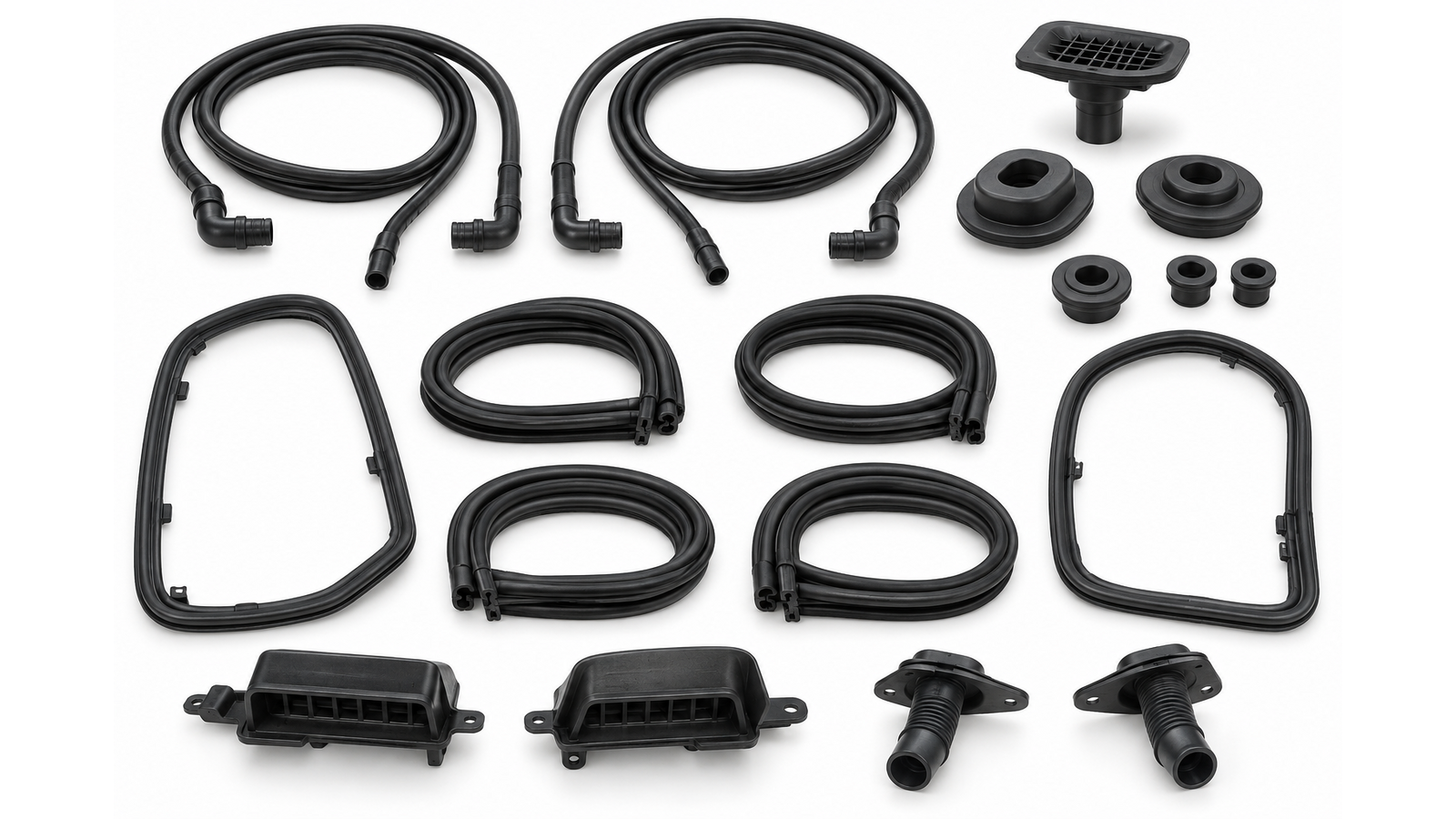
What you may notice: Damp carpets, a musty smell, or damp patches around the headlining or A-pillars, particularly after heavy rain.
Possible causes:
- Blocked sunroof drain channels, a known Discovery issue that can cause water to overflow into the cabin
- Perished door or tailgate seals
- Other body seal degradation
What to check:
- Check and clear sunroof drain channels — often the first and most common cause
- Inspect door, tailgate and windscreen seals
- Carry out a water test if the source isn't obvious
Discovery 5 — 2.0 Ingenium Diesel (2017–2020)
Timing-Chain Rattle / Stretch / Failure
What you may notice: A rattling noise on a cold start that clears after a few seconds, or in more serious cases a persistent rattle or knocking noise.
Engine Management
Possible causes:
- Timing-chain wear or stretch, a well-documented issue on early 2.0 Ingenium diesel engines, often linked to oil dilution and inconsistent oil-change intervals
- In advanced cases, chain failure leading to more significant engine damage
What to check:
- Never dismiss a cold-start rattle as normal on this engine — get it checked promptly
- Review the oil-change history closely; shorter intervals than the standard schedule are often recommended for this engine
- Have timing-chain tensioner and chain condition assessed by a specialist where a rattle is present
Oil Dilution
What you may notice: No specific driver-noticed symptom in early stages — this is a known characteristic of the engine's DPF regeneration strategy affecting oil condition over time.
Possible causes:
- Diesel fuel entering the oil during DPF regeneration cycles, which is a known characteristic of this engine rather than a fault in itself, but which accelerates oil-related wear (including the timing chain) if not managed with more frequent oil changes
What to check:
- Follow a shorter oil-change interval than the standard schedule where recommended for this engine
- Ask for evidence of oil-change frequency when buying, not just whether a service was done
Interrupted DPF Regeneration
What you may notice: A DPF warning light, particularly on vehicles used mainly for short journeys.
DPF warning
Possible causes:
- Regular short journeys preventing the regeneration cycle from completing
- A genuine DPF or sensor fault if the warning persists despite suitable driving
What to check:
- Attempt a controlled motorway-speed run to allow regeneration to complete where safe to do so
- Read stored fault codes if the warning returns quickly
- Have the DPF and related sensors inspected if regeneration consistently fails to complete
Turbocharger Problems
What you may notice: Reduced power, unusual noise from the turbo, or a Restricted Performance message.
Restricted Performance
Possible causes:
- A boost leak elsewhere in the system
- Turbocharger wear
- A boost-control actuator fault
What to check:
- Rule out boost leaks in hoses and connections first
- Check boost-control actuator operation
- Have the turbocharger assessed if other causes are ruled out
Piston Cooling Oil-Jet Solenoid Faults
What you may notice: Usually identified via a stored diagnostic fault code rather than a noticeable driving symptom, though it can contribute to engine knocking noises if left unaddressed.
Engine Management
Possible causes:
- A faulty piston-cooling oil-jet solenoid valve
What to check:
- Read stored fault codes for solenoid-specific errors
- Have the solenoid and its wiring checked by a specialist familiar with this engine
EGR Faults
What you may notice: Rough idle or a stored EGR-related fault code.
Engine Management
Possible causes:
- A sticking or carboned EGR valve
- Sensor or wiring faults in the EGR circuit
What to check:
- Read stored fault codes for EGR-specific errors
- Inspect the EGR valve for carbon build-up
AdBlue / SCR Problems
What you may notice: An AdBlue warning message, or in some cases reduced starts remaining before the vehicle restricts starting.
AdBlue level lowSCR system fault
Possible causes:
- Low AdBlue level, simply requiring a refill
- A faulty AdBlue level sensor or injector
- A wider SCR (selective catalytic reduction) system fault
What to check:
- Check and top up AdBlue level first
- Read stored fault codes if the warning persists after topping up
- Have the AdBlue injector and SCR system checked if a genuine fault is indicated
Discovery 5 — 3.0 V6 Diesel (2017–2020)
Restricted Performance
What you may notice: Noticeably reduced power, particularly under load or uphill, with a Restricted Performance message.
Restricted Performance
Possible causes:
- Intake or boost leaks
- A cracked inlet manifold
- Throttle-body problems
- A stored fault code affecting engine management
What to check:
- Read stored diagnostic fault codes before replacing anything
- Check for boost/intake leaks and manifold condition
- Check throttle body operation
Inlet-Manifold Leaks / Cracked Manifolds
What you may notice: A whistling or hissing noise under acceleration, or a Restricted Performance message.
Restricted Performance
Possible causes:
- A cracked inlet manifold, carried over as a risk area from the related SDV6 engine family
- Perished intake hoses or connections
What to check:
- Inspect the inlet manifold and connecting hoses for cracks
- Check for boost leaks around joints and clips
Throttle-Body Problems
What you may notice: Hesitant throttle response, sometimes alongside a Restricted Performance message.
Restricted Performance
Possible causes:
- A sticking or dirty throttle body
- A wiring fault at the throttle body connector
What to check:
- Inspect and clean the throttle body where appropriate
- Check wiring and connector condition
Crankshaft / Bottom-End Failure
What you may notice: Unusual knocking or rumbling noise from the engine, or a low oil-pressure warning.
Oil pressure warning
Possible causes:
- Major engine failure is a known risk on some examples of this engine family, but it is not inevitable and should not be assumed without evidence — oil-change history and any unusual noise are the key things to establish
What to check:
- Listen carefully for any unusual engine noise on a cold start
- Review the full service and oil-change history in detail before buying or diagnosing
- Check oil pressure readings via diagnostic equipment if any noise is present
- Treat any suspected bottom-end noise as requiring investigation before further driving
Discovery 5 — D250 / D300 (2021 onwards)
DPF Operation
What you may notice: A DPF warning light, most likely on vehicles used mainly for short journeys.
DPF warning
Possible causes:
- Short-journey use preventing full regeneration
- A genuine DPF or sensor fault if the warning persists despite suitable driving
What to check:
- Attempt a controlled motorway-speed run to complete regeneration where safe
- Read stored fault codes if the warning returns quickly
AdBlue / SCR Issues
What you may notice: An AdBlue warning message.
AdBlue level lowSCR system fault
Possible causes:
- Low AdBlue level requiring a refill
- A faulty AdBlue sensor or injector
What to check:
- Check and top up AdBlue first
- Read stored fault codes if the warning persists
48V Mild-Hybrid Electrical Faults
What you may notice: A warning relating to the mild-hybrid system, reduced smoothness during the engine's automatic stop/start, or unusual charging behaviour.
Hybrid system fault
Possible causes:
- A fault within the 48V mild-hybrid system components (belt-integrated starter-generator, 48V battery or control module)
What to check:
- Read stored fault codes specific to the mild-hybrid system
- Have the 48V battery and associated components checked by a specialist familiar with this system
12V Battery Faults
What you may notice: Multiple unrelated warning lights, electrical glitches, or difficulty starting.
Multiple / intermittent warning lights
Possible causes:
- A weak or failing 12V battery
- A charging-system fault
What to check:
- Test 12V battery condition and state of charge
- Check charging system output
Charging System Warnings
What you may notice: A battery/charging warning light on the dashboard.
Charging system fault
Possible causes:
- An alternator or charging-system fault
- A battery reaching the end of its service life
What to check:
- Test charging voltage while running
- Test battery health independently of the charging test
Pivi / Pivi Pro Connectivity & Software Faults
What you may notice: The infotainment screen freezing, restarting, or losing connectivity features intermittently.
Possible causes:
- An infotainment software fault requiring an update
- A connectivity module fault in rarer cases
What to check:
- Check for and apply the latest infotainment software update
- If issues persist after updating, have the system checked for a hardware/module-level fault
Discovery 5 — Chassis & Body
Door-Latch Failures
What you may notice: A door failing to latch fully, an intermittent door-ajar warning, or the same double-beep/mirror symptoms described under Door Lock / Latch Actuator Fault.
Door open (despite being shut)
Possible causes:
- A worn or failing electronic door-latch mechanism, a known Discovery 5 wear item
What to check:
- Identify the specific affected door by testing each one individually
- Inspect the latch mechanism and its wiring
- See the Door Lock / Door Latch Actuator Fault entry for wider diagnostic steps
Windscreen Water Leaks / Damp Headlining
What you may notice: Damp patches on the headlining or around the A-pillars, particularly after heavy rain or a car wash.
Possible causes:
- A perished or incorrectly seated windscreen seal
- Blocked drain channels around the windscreen or sunroof
What to check:
- Inspect the windscreen seal for damage or poor fitment, especially if the windscreen has been replaced
- Check drain channels are clear
- Carry out a water test to confirm the entry point
Powered Tailgate Faults
What you may notice: The powered tailgate failing to open or close automatically, moving slowly, or reversing direction unexpectedly.
Tailgate fault
Possible causes:
- A motor, sensor or software fault within the powered tailgate system
- An obstruction being detected incorrectly by the anti-trap sensors
What to check:
- Check for obstructions and clean the tailgate seal/sensor area
- Read stored fault codes relating to the tailgate module
- Attempt the tailgate's software reset procedure where applicable
Deployable Towbar Faults
What you may notice: The electrically deployable towbar (where fitted) failing to deploy or retract, or a related warning message.
Towbar fault
Possible causes:
- A motor or switch fault within the deployable towbar mechanism
- A wiring fault to the towbar module
What to check:
- Check the towbar switch and control circuit
- Read stored fault codes relating to the towbar module where fitted
Symptom-by-Symptom: What to Check
Some faults are easier to talk about the way owners actually describe them, rather than by part name. These cover the symptoms we're asked about most.
Restricted Performance
Drivers usually notice this as a sudden, definite drop in power — the car simply won't accelerate the way it should, and it's often most obvious under heavy acceleration or climbing a hill, where the engine would normally need to work hardest. This is the vehicle's engine management intentionally limiting power in response to something it has detected, rather than a random loss of power. Correct diagnosis starts with reading stored fault codes and, where needed, boost testing — replacing parts before that step risks fixing the wrong thing. See the full entry above ↑
Knock When Braking
This is typically worn front lower suspension-arm bushes. The movement happens because the suspension geometry loads and shifts as the vehicle brakes, and a bush with play in it will knock at exactly that moment. It's worth having the rest of the front suspension — ball joints, drop links, anti-roll-bar bushes — inspected at the same time, since several components can produce a similar noise. See the full entry above ↑
Car Drops Overnight
On air-suspension models, a vehicle that's noticeably lower on one corner after standing overnight almost always has a slow air leak — most often the air spring/strut itself, the valve block, or an air line. A height-sensor fault can produce the same symptom. The compressor should not automatically be blamed; it's usually working harder to compensate for a leak elsewhere, not causing the problem itself. See the full entry above ↑
Double Beep When Locking
A double beep means the central locking system thinks a door, the bonnet or the tailgate hasn't closed properly. Check each one individually and firmly before assuming a fault — but if everything is genuinely shut, a door-latch actuator fault is a well-known Discovery issue, and testing each door one at a time will usually identify which one is affected. See the full entry above ↑
Vibration Around 70mph
Start with the simplest explanations first: tyres and wheel balance resolve the majority of speed-related vibration. A damaged wheel or a tyre with internal deformation can produce the same feeling. Wheel bearings are next on the list. The propshaft or wider driveline should only really be considered once tyres, wheels and bearings have all been checked and ruled out. See the full entry above ↑
Steering Vibration When Braking
Vibration specifically under braking — rather than all the time — points to the front brakes rather than the driveline. Brake disc run-out, distortion from heat cycling, or uneven pad-deposit transfer on the disc surface are the usual causes. Hub run-out and suspension movement are worth checking too if the discs themselves measure within specification. See the full entry above ↑
Water in Fuel
A "Water in Fuel" message needs genuine water contamination ruled out first — drain and inspect the water-in-fuel sensor bowl before assuming anything else. If there's genuinely no water present, the next step is the sensor itself, along with its wiring and connector. Repeated warnings shouldn't just be cleared and ignored. See the full entry above ↑
Stop/Start Not Working
The system is designed to disable itself under conditions it doesn't consider suitable — a cold engine, low battery charge, high climate-control demand, or a door left open, for example — and that's entirely normal, not a fault. If stop/start stays unavailable under conditions where it should clearly be working, the main battery, an auxiliary start-stop battery where fitted, and the battery-monitoring system are the next things to check. See the full entry above ↑
What HMC Checks When Preparing a Discovery
Years of specialist focus on the Discovery 4 and Discovery 5 mean we know where problems are most likely to show up. Depending on age, mileage, model, condition and specification, these are some of the areas we consider when inspecting and preparing a Discovery for sale.
- Engine warning lights & stored diagnostic faults
- Restricted Performance history
- Intake / boost leaks
- DPF condition and regeneration history
- EGR condition
- AdBlue / SCR system (where fitted)
- Air suspension operation and ride height
- Front & rear suspension arms
- Steering components
- Wheel bearings
- Brake discs and pads
- Electronic parking brake (Discovery 5)
- Tyre condition and wear pattern
- Wheel alignment, where required
- Door lock & latch operation, all doors
- Tailgate operation
- Battery condition and charging system
- Electrical equipment & infotainment function
- Coolant level and condition
- Service history documentation
- Timing-belt history, where applicable
- MOT condition
- Full road test
This isn't a promise that every vehicle needs work in every one of these areas — most don't. It's the checklist our specialist knowledge is built around, so nothing gets missed either way. See how HMC prepares a Discovery for the wider picture.
Related Discovery Guides
- Check a used Discovery before you buy — free 40-point checklist
- Discovery 4 Buyer's Guide
- Discovery 5 Buyer's Guide
- Discovery 4 vs Discovery 5
- Timing Chain & Timing Belt Guide
- DPF Issues Explained
- Air Suspension: What to Know
- Inlet Manifold & Swirl Flap Issues
- Gearbox Issues & Servicing
- Battery & Warning Light Issues
- HMC Discovery Approved — Why Buy from HMC
- Browse Current Discovery Stock
Need Help With Your Discovery?
Ask the Discovery Hub
For buying advice, warning-light explanations, vehicle selection, sourcing and general Discovery guidance.
Book Newtown Garage
For existing owners who need diagnosis, inspection, servicing, MOT or repair.
Ask Newtown Garage, Chesham
If you already own a Discovery 4 or Discovery 5 and are experiencing one of the faults described above, tell us the symptoms and our workshop team can help identify the likely areas to investigate. A physical inspection or diagnostic scan may still be required before any repair can be confirmed.
Ask the Discovery Hub
For buying advice, warning-light explanations, vehicle selection, sourcing or general Discovery guidance. This goes directly to the Discovery Hub team — if your vehicle needs a physical inspection, diagnosis or repair, use "Book with Newtown Garage" instead.
Frequently Asked Questions
What are the most common Discovery 4 problems?
The areas that come up most often are Restricted Performance / limp mode, air suspension faults, front lower suspension-arm knock, EGR and DPF issues, and door-lock actuator faults. See the Discovery 4 sections above for the full list.
What are the most common Discovery 5 problems?
This depends heavily on engine generation. Early 2.0 Ingenium diesels (2017–2020) are best known for timing-chain rattle; the D250/D300 (2021 onwards) has a different set of considerations, mostly emissions and electrical. See the Discovery 5 sections above, which are split by engine.
Why does my Discovery say Restricted Performance?
Restricted Performance is the vehicle intentionally limiting power in response to a detected fault, most often an intake/boost leak, a cracked inlet manifold or a throttle-body issue. It always needs a diagnostic fault-code read to confirm the cause. See details ↑
Why does my Discovery knock when braking?
This is most often worn front lower suspension-arm bushes, which move as the suspension loads under braking. Other suspension components should still be checked at the same time. See details ↑
Why does my Discovery beep twice when I lock it?
A double beep means a door, the bonnet or the tailgate hasn't registered as fully closed. Check each one individually first — if they're all shut properly, a door-latch actuator fault is a common Discovery-specific cause. See details ↑
Why won't my Discovery door unlock?
This is usually a door-latch actuator fault on the affected door. Test each door individually to identify which one is affected before assuming a wider central-locking fault. See details ↑
Why won't my Discovery tailgate open?
Check battery condition first, as a weak 12V battery can affect the release solenoid. If the battery is fine, the tailgate latch/actuator (or, on Discovery 5 powered tailgates, the motor or software) may need investigating. See details ↑
Why is my Discovery sitting lower on one side?
On air-suspension models, this points to an air leak — most likely an air spring, the valve block or an air line — or a faulty height sensor. The compressor is often blamed first but usually isn't the actual cause. See details ↑
Why does my Discovery drop overnight?
A vehicle that settles lower after standing overnight almost always has a slow air leak somewhere in the suspension system. Diagnosis should trace the actual leak point rather than replacing parts speculatively. See details ↑
Why does my Discovery vibrate at 70mph?
Start with tyres and wheel balance — this resolves the majority of speed-related vibration. Wheel bearings and, less commonly, the propshaft or driveline are worth checking if tyres and wheels are confirmed correct. See details ↑
Why does my steering wheel shake when braking?
This points to front brake disc judder — usually disc run-out, distortion or uneven pad deposits rather than a suspension fault, though hub and suspension condition are worth checking too. See details ↑
Why does my Discovery say Water in Fuel?
Genuine water contamination in the fuel needs to be ruled out first by draining and inspecting the water-in-fuel sensor bowl. If no water is present, the sensor, wiring or connector should be checked next. See details ↑
Why doesn't stop/start work on my Discovery?
The system intentionally disables itself under unsuitable conditions (cold engine, low battery charge, doors open, and similar) — that's normal. If it stays unavailable under normal conditions, battery and charging-system faults are the next things to check. See details ↑
What causes DPF problems on a Discovery?
Most commonly, a pattern of short journeys that prevents the DPF from completing a regeneration cycle. A genuine sensor or filter fault is possible if the warning persists despite suitable motorway-speed driving. See details ↑
What is the Discovery 5 2.0 Ingenium timing-chain problem?
Early 2.0 Ingenium diesel engines (2017–2020) are known for timing-chain rattle, stretch and in some cases failure, often linked to oil dilution from the DPF regeneration strategy and inconsistent oil-change intervals. A cold-start rattle on this engine should always be checked promptly. See details ↑
Are all Discovery 5 Ingenium engines the same?
No. The early 2017–2020 2.0 Ingenium diesel has the timing-chain risk described above. The later D250/D300 (2021 onwards) is a different engine generation with its own, separate set of considerations — it should not be assumed to share the same failure pattern.
Does the Discovery 4 have timing belts?
Yes, on the 2.7 and 3.0 diesel engines — these are belt-driven, not chain-driven. The 5.0 V8 petrol uses a timing chain and isn't affected. Ask for dated evidence of belt replacement rather than assuming from service history alone. See details ↑
Does the Discovery 5 have a timing belt or timing chain?
The Discovery 5's engines use timing chains, not belts — including the 2.0 Ingenium diesel, which is why its known issue is chain rattle/stretch rather than a belt-replacement interval. See details ↑
Are Discovery warning lights always expensive to repair?
No. Some warning lights (a low AdBlue level, for example) are a simple top-up. Others need proper diagnosis before you know what's actually involved — correct diagnosis is important before assuming the worst or replacing parts unnecessarily.
Is a knocking front suspension an MOT failure?
It depends on the specific cause and severity — worn suspension components can fail an MOT if play exceeds the permitted limits. Any knocking noise is worth investigating promptly regardless of MOT status. See details ↑
What should I check before buying a used Discovery 4?
Timing-belt replacement evidence, air-suspension condition, service history, software update history, and rust on sills and the underside are the priority checks. See our Discovery 4 buyer's guide for the full list.
What should I check before buying a used Discovery 5?
Confirm the exact engine and model year first, since the 2.0 Ingenium, 3.0 V6 and D250/D300 have different known areas to check. Software update history matters most on pre-2021 cars. See our Discovery 5 buyer's guide for the full list.
Ready to Find Your Discovery?
Browse our hand-picked stock of Discovery 4 and Discovery 5.
Browse Stock